
Synopsis
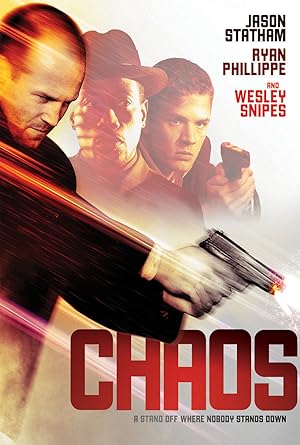
Action cinema constantly produces memorable blockbusters, yet certain compelling projects slip quietly under the radar. Released initially in late 2005 in select international markets before reaching North America years later, Tony Giglio’s crime thriller Chaos (2005) perfectly exemplifies this phenomenon. Armed with a stellar leading cast comprising Jason Statham, Wesley Snipes, and Ryan Phillippe, the film attempted to blend high-stakes bank robbery tropes with the complex mathematical principles of chaos theory. Today, genre enthusiasts continuously revisit this intricate movie, praising its ambition, narrative twists, and strong character dynamics. Despite missing a massive theatrical rollout originally, the production found a loyal audience on home video and streaming platforms, proving that smart writing can overcome distribution hurdles.
A Robbery Rooted in Scientific Unpredictability
The narrative kicks off with intense momentum when a group of armed criminals takes hostages inside a Seattle bank. The mastermind behind the siege, calling himself Lorenz, specifically demands to negotiate with Detective Quentin Conners. The police department recently suspended Conners following a tragic hostage situation that resulted in a civilian casualty. Reluctantly, the precinct reinstates the disgraced veteran and pairs him with a young rookie named Shane Dekker. Consequently, the newly formed duo must navigate a highly volatile crime scene where nothing goes according to standard protocol. The stakes rise significantly when the tactical teams attempt to breach the building, resulting in massive explosions and a frantic escape by the criminals. This energetic opening sets a blistering pace for the rest of the investigation.
Interestingly, Lorenz leaves behind cryptic clues pointing directly to James Gleick’s famous book on chaos theory. The robbers execute a massive digital heist, planting a computer virus designed to silently siphon a billion dollars through randomly evolving transactions. Furthermore, the movie uses this scientific concept as a blueprint for the entire script. Every explosion, shootout, and misdirection feels completely random initially. Subsequently, the screenplay meticulously weaves these seemingly disjointed events into a highly calculated master plan. Viewers watch closely as Dekker struggles to find the hidden pattern amidst the utter destruction caused by Lorenz and his crew.
Evaluating the Heavyweight Cast Dynamics
Star power remains one of the strongest assets of Chaos (2005). Jason Statham steps away from his usual martial arts roles to deliver a grounded, gritty performance as Quentin Conners. He portrays the grizzled, cynical detective with remarkable restraint, relying heavily on sharp dialogue rather than physical combat. Conversely, Ryan Phillippe brings a sharp, analytical energy to Detective Shane Dekker. Dekker represents the moral compass of the story, relentlessly pursuing the truth even when the evidence points toward deep-seated police corruption.
Meanwhile, Wesley Snipes commands the screen as the enigmatic Lorenz. Snipes infuses the villain with a cool, intellectual menace that contrasts sharply with the frantic energy of the police force outside the bank. He clearly enjoys playing a sophisticated antagonist who always remains two steps ahead of the authorities. Moreover, the strong supporting cast features Henry Czerny and Justine Waddell, who add significant depth to the Seattle Police Department’s internal politics. They accurately depict the bureaucratic hurdles and internal suspicions that complicate high-profile investigations. Ultimately, the tense interactions between Statham, Phillippe, and Snipes elevate the material far beyond a standard procedural drama. Their on-screen chemistry compensates for the occasional pacing issues, keeping the audience thoroughly engaged from start to finish.
Tony Giglio’s Direction and Technical Execution
Director Tony Giglio demonstrates immense skill in staging complex action sequences while maintaining a tight focus on the central mystery. He establishes a gloomy, atmospheric visual style that perfectly suits the murky ethics of the characters. Additionally, the cinematography highlights sweeping city shots that ground the story in a realistic urban environment. Instead of relying on excessive computer-generated imagery, Giglio utilizes practical effects and real locations to build genuine tension.
The musical score by Trevor Jones also deserves special recognition. Jones crafts a highly unconventional soundtrack that blends orchestral elements with electronic dance beats. This distinct musical choice mirrors the film’s central theme of finding order within absolute randomness. Therefore, the audio-visual presentation heavily enhances the viewing experience. Furthermore, Giglio brilliantly structures the plot to disguise the ultimate revelation. The director plants subtle visual cues early in the runtime, rewarding observant viewers upon repeat viewings.
The Enduring Appeal of the Final Twist
Thrillers heavily rely on their third act to leave a lasting impression, and Chaos (2005) delivers a massive narrative shock. Without revealing every detail, the climax completely recontextualizes the entire movie. Dekker eventually discovers that the initial tragedy on the bridge, the bank heist, and the missing evidence all connect perfectly. The story confidently pulls the rug out from under the audience, revealing a level of betrayal that completely shatters the rookie detective's worldview.
Many contemporary heist movies struggle to surprise modern audiences, yet this particular film manages to execute its final trick flawlessly. Action cinema fans appreciate how the script commits fully to its cynical worldview. Today, digital platforms help new generations discover the project, sparking fresh discussions across social media and movie forums. People recognize the movie as a cleverly constructed puzzle box that successfully maximizes the talents of its iconic leading men. The clever incorporation of high-level mathematics into a street-level crime story creates a unique flavor that differentiates it from similar releases of that era. Consequently, the movie firmly secures its status as an underrated gem that successfully transformed a standard cops-and-robbers story into a thought-provoking cinematic exercise.